
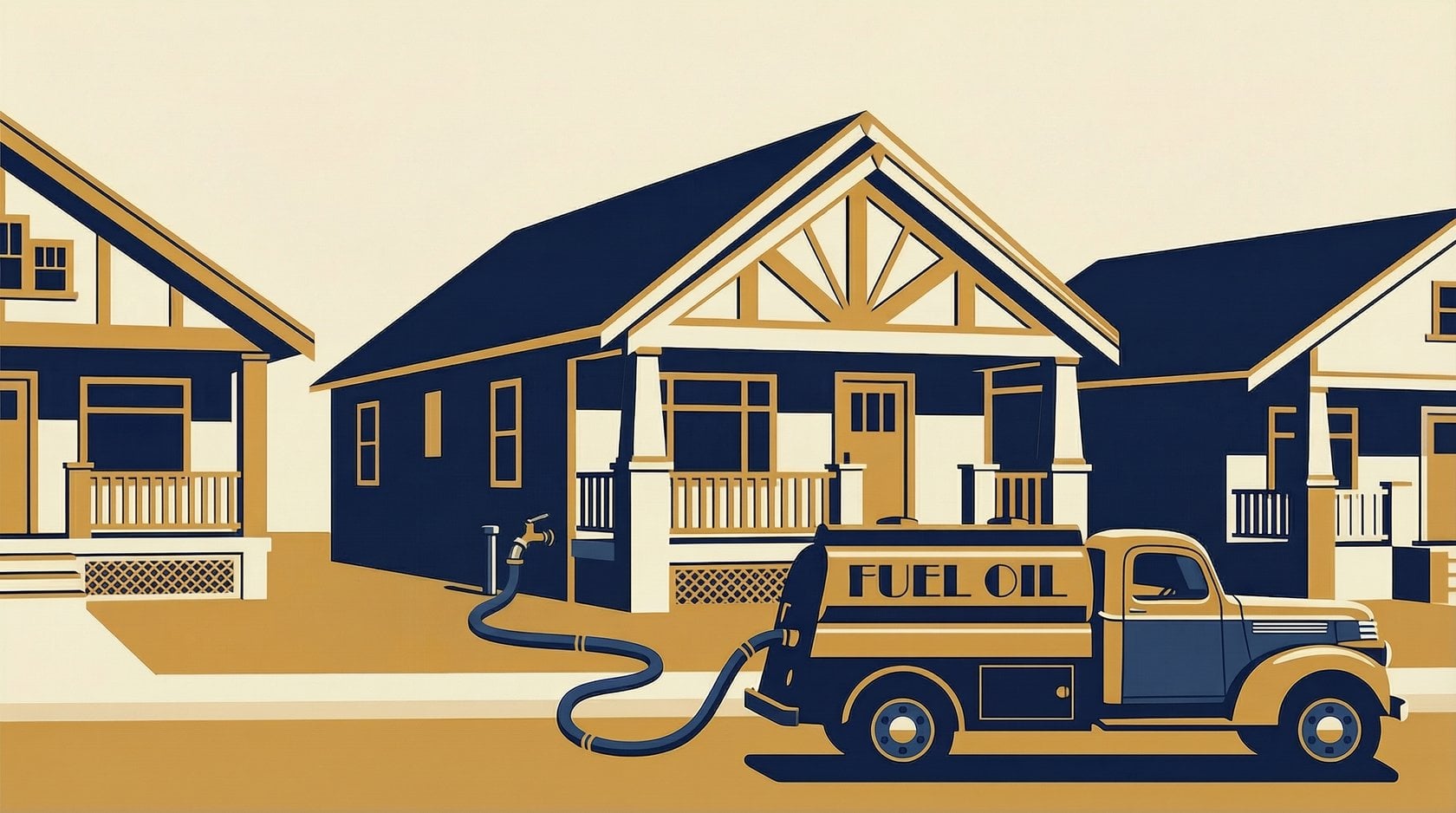

This property has a documented history as a property with a heating oil tank predating 1986. Historical insurance policies issued during those prior operations and through 1986 could recover the cleanup costs already paid.
This property at 1446 NW 53rd Street contains a closed-in-place 300-gallon heating oil underground storage tank along the southern boundary of the asphalt-paved parking lot, with TPH-Diesel and oil-range contamination detected in the surrounding soil. The site investigation also identified tetrachloroethylene (PCE) in the subsurface, consistently attributed in the documents to upgradient dry cleaning operations at neighboring properties rather than to on-site sources. Evaluated remediation alternatives included institutional controls, engineered barriers such as a vapor barrier and sub-slab depressurization system, potential UST removal with approximately 100 cubic yards of soil excavation, and in-situ groundwater treatment with chemical oxidants followed by one to two years of monitoring, with estimated costs ranging from $250,000 to $1,500,000. The site has received a No Further Action determination under the Voluntary Cleanup Program. That history could support an insurance cost recovery claim against carriers who issued insurance policies 40+ years ago.
Why Historical Insurance Policies May Be Accessible
Pre-1986 Commercial General Liability (CGL) policies were occurrence-based and did not contain an effective pollution exclusion in Washington. If contamination occurred while those policies were active, those historical insurance carriers may still have a legal obligation to fund the cleanup costs, even if the business closed or the property changed hands.
The petroleum contamination at this property originated from a heating oil underground storage tank described in the investigation documents as older closed-in-place infrastructure, installed and operated during a period of historical use that predates 1986 — the dividing line after which occurrence-based Commercial General Liability policies began incorporating effective pollution exclusions. The broader contamination picture at the site traces to upgradient sources whose operations are documented as far back as the early 1950s, reinforcing that no recent release event accounts for the conditions here. The documented remediation cost exposure — $250,000 to $1,500,000 across evaluated alternatives — represents the financial liability that historical CGL carriers whose policies were in force during that pre-1986 operational window may still be obligated to fund.
Restorical's role is to locate viable historical policies, determine whether a successful cost recovery claim is possible, and assist our clients and their legal counsel to obtain insurance coverage for costs already incurred. Restorical's forensic accounting team works to re-establish and document past cleanup expenditures, ensuring the strongest possible basis for recovery.
Recovering Costs from an Older Cleanup
If this site reached No Further Action years ago, the original cleanup expenditures may be difficult to reconstruct. Restorical's forensic accounting team specializes in re-establishing and documenting past cleanup costs — even decades later — to build the strongest possible basis for an insurance recovery claim.
What We Look For
- Historical insurance policies (pre-1986)
- Policy numbers, carrier names, and coverage periods
- Connection between contamination timing and policy period
- Evidence linking cleanup obligation to insured activity
What We Deliver
- Historical Coverage Chart
- Trigger Analysis & Property/Policy Nexus
- Coverage strategy with recommendations
- Insurance funding for your remediation
- Claims Management & Forensic Accounting
The Restorical Proven Process
Ready to learn more?
Contact UsThis analysis is preliminary and based on publicly available records. Restorical Research is not a law firm and does not provide legal advice.