
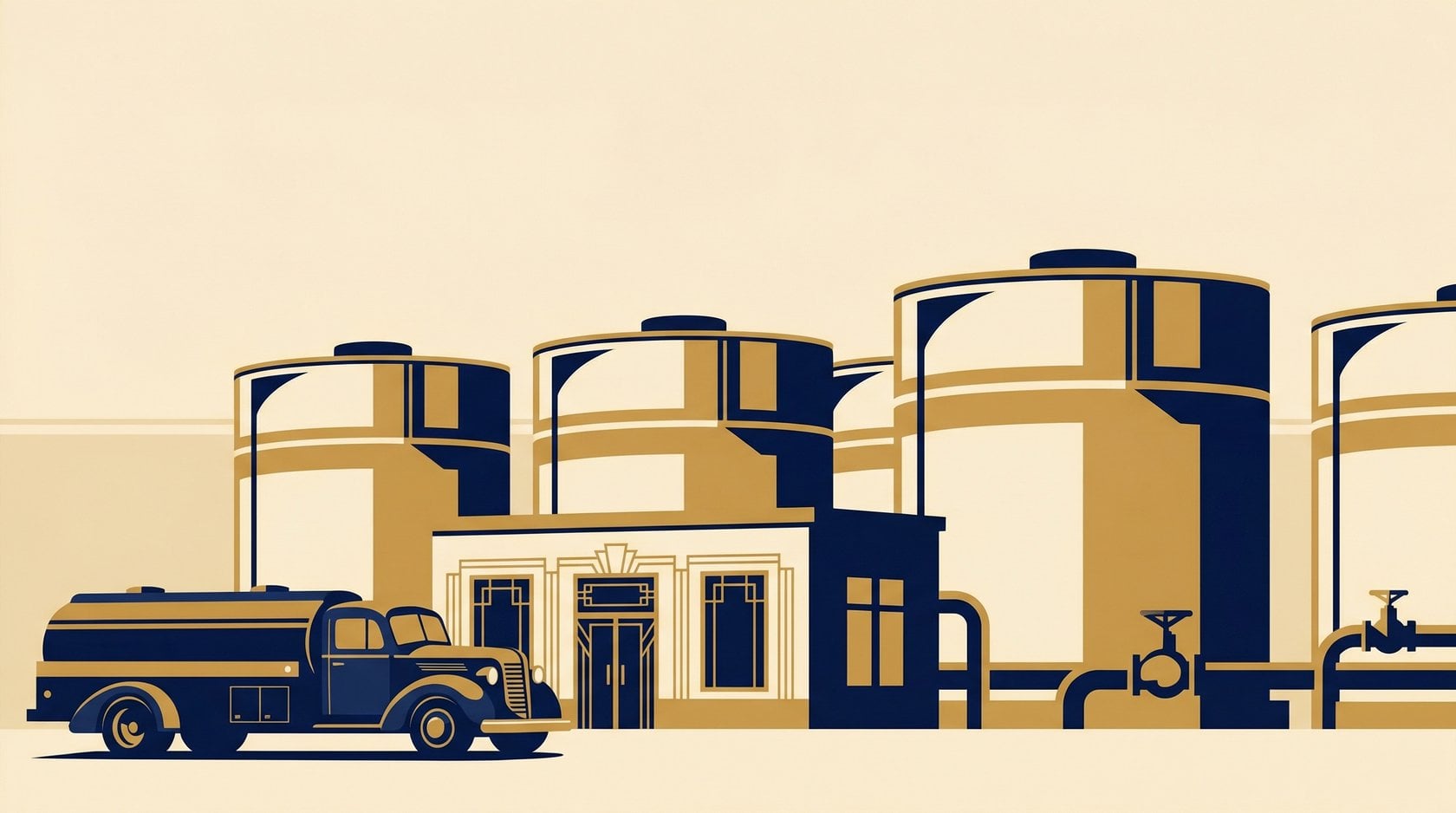

This property has a documented history as a bulk fuel distribution terminal going back to 1956. Historical insurance policies issued during operations at this property and through 1986 could fund a cleanup — and recover costs already spent.
Blaine Marina has operated a bulk fuel storage and transfer facility at this waterfront property since at least the mid-1950s, with above-ground storage tanks installed around 1956 and facility development tracing to the late 1930s and 1940s. The tank farm includes three 8,500-gallon ASTs holding diesel and gasoline, and fuel storage and transfer operations are identified as the primary source of petroleum hydrocarbon contamination in soil and groundwater. A NAPL recovery program ran from 1997 to 2011, removing approximately 350–400 gallons of free-phase product from monitoring wells using bailers and pumps; metallic fuel pipes were replaced with nonmetallic hose in 2011. Cleanup remains active, with an ongoing interim action involving shallow trench excavation and steel sheetpile installation to repair the site bulkhead and prevent further contamination releases. That history could support an insurance cost recovery claim against carriers who issued insurance policies 40+ years ago.
Why Historical Insurance Policies May Be Accessible
Pre-1986 Commercial General Liability (CGL) policies were occurrence-based and did not contain an effective pollution exclusion in Washington. If contamination occurred while those policies were active, those historical insurance carriers may still have a legal obligation to fund the cleanup costs, even if the business closed or the property changed hands.
Forensic analysis of the petroleum contamination here has traced the diesel component to refining dates between the mid-1970s and late 1980s, the gasoline fraction to 1978–1980, and leaded gasoline mixtures to an era spanning the 1920s through the late 1980s — all originating from bulk fuel operations that predated the effective pollution exclusions added to CGL policies after 1986. Occurrence-based policies issued to Blaine Marina and its predecessors during those decades of continuous fuel storage and transfer carry no such exclusion and remain enforceable today. The documented remediation expenditures — years of NAPL recovery, infrastructure replacement, and continuing bulkhead stabilization — represent costs the historical carriers may be obligated both to recover and to fund going forward.
Restorical's role is to locate viable historical policies, determine whether a successful coverage claim is possible, and assist our clients and their legal counsel to obtain insurance coverage. Restorical then manages the claim, including accounting, to ensure the cleanup is funded in a timely manner.
What We Look For
- Historical insurance policies (pre-1986)
- Policy numbers, carrier names, and coverage periods
- Connection between contamination timing and policy period
- Evidence linking cleanup obligation to insured activity
What We Deliver
- Historical Coverage Chart
- Trigger Analysis & Property/Policy Nexus
- Coverage strategy with recommendations
- Insurance funding for your remediation
- Claims Management & Forensic Accounting
The Restorical Proven Process
Ready to learn more?
Contact UsThis analysis is preliminary and based on publicly available records. Restorical Research is not a law firm and does not provide legal advice.