
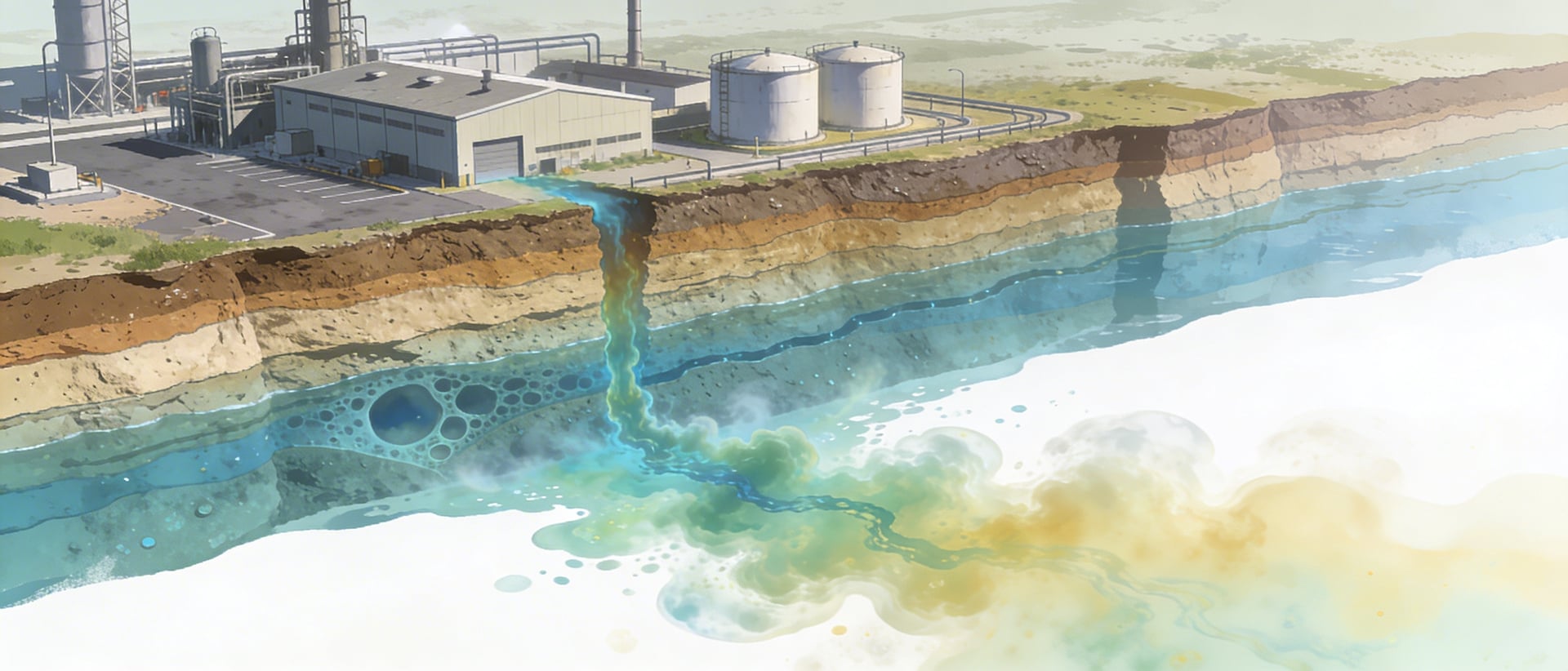
When contamination crosses a property line, the legal and financial stakes change immediately. A business or property owner dealing with on-site contamination faces increased cleanup costs and regulatory pressure. Property owners dealing with off-site contamination also face liability to people and properties they don’t own. This guide explains what third-party environmental impact is, what liability it creates, and why it may simultaneously unlock historical insurance coverage worth pursuing.
What Constitutes Third-Party Environmental Impact
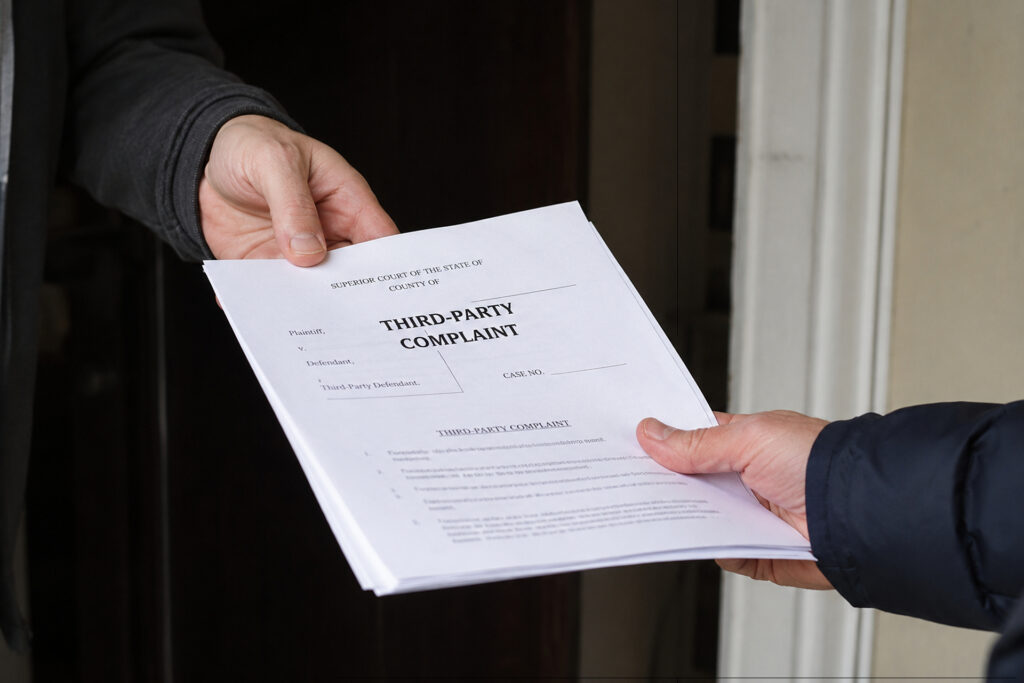
In the context of an insurance policy, the first party is the policyholder or insured, the second party is the insurance company providing coverage, and the third party is an unIn the context of an insurance policy, the first party is the policyholder or insured, the second party is the insurance company providing coverage, and the third party is an unrelated individual or business who may make a claim or file a lawsuit for damages caused by the first party. First-party property damage is generally excluded from commercial general liability (CGL) policies, meaning contamination that affects only the policyholder’s own property is unlikely to be covered.
Third-party impact begins at the property line, where contamination has trespassed over and reached neighboring parcels, entered shared water resources, or harmed individuals who have no connection to the source property. The defining characteristic is not where the contamination started, but where it has migrated to and who bears the consequences.
The Liability Exposure Off-Site Contamination Creates
Once contamination crosses a property line, or impacts a water of the state, the owner of the source property can face liability on multiple fronts simultaneously. Third-party environmental claims generally fall into four categories, each with distinct legal consequences, and all four can arise from a single contamination event that began on a single property years or decades earlier.
Third-Party Bodily Injury Claims
Third-party bodily injury claims arise when residents, workers, or occupants of neighboring properties are exposed to migrating contaminants through contaminated drinking water, groundwater, surface water, soil contact, or vapor intrusion. These claims can involve medical expenses, lost wages, and damages for diminished quality of life. Claimants are not limited to original property owners or long-term neighbors. Tenants, employees of nearby businesses, and others who were present during the period of exposure may all have standing to bring claims regardless of when they arrived at the affected property.
Third-Party Property Damage Claims
Third-party property damage claims arise when neighboring land loses value, becomes unusable, or requires remediation because of contamination that originated elsewhere. Adjacent property owners may seek compensation for the cost of treating their own groundwater, testing their soil, or cleaning structures affected by vapor intrusion.
Natural Resource Damage Claims
Natural resource damage (NRD) claims are brought by government trustees, typically federal or state agencies, on behalf of shared natural resources harmed by contamination. In most states, surface water and groundwater are public resources held in trust by the state rather than private property, which is why contamination reaching those resources constitutes third-party impact even when the water lies beneath private land. Unlike private property damage claims, NRD claims are not limited to remediation costs. Damages can include the cost of restoring the affected resource and compensation for its lost use value during the period of injury. Shared waterways, public aquifers, wetlands, and fisheries are common subjects of NRD claims, and they can arise independently of any private lawsuit.
Regulatory Demands
Regulatory demands represent a category that many property owners underestimate. Under the Comprehensive Environmental Response, Compensation, and Liability Act (CERCLA) and parallel state statutes, government agencies can compel cleanup of off-site contamination and pursue the source property’s owner for those costs. A regulatory demand citing third-party harm carries the same legal weight as a direct claim from a neighbor, and it often arrives before any private lawsuit is filed. Potentially responsible parties (PRPs) designated under CERCLA can face joint and several liability for off-site cleanup costs even when their contribution to the total contamination was partial.
The combined exposure from bodily injury claims, property damage claims, natural resource damages, and regulatory demands can be substantial, particularly when contamination has migrated to multiple neighboring properties over an extended period.
How Contamination Migrates Beyond Property Lines
Contamination rarely stays where it originated. Most legacy contamination at commercial and industrial sites involves substances that move through the environment over time, often without visible signs until they reach a neighboring property or a municipal water source. The most common migration pathways include:
| Migration Pathway | How Contamination Spreads Off-Site |
|---|---|
| Groundwater plume migration | Dissolved contaminants enter groundwater and travel in the direction of the water table’s natural gradient; this groundwater plume sometimes reaches adjacent properties or drinking water supplies hundreds of feet from the source. |
| Vapor intrusion | Volatile organic compounds (VOCs) such as perchloroethylene (PCE) and trichloroethylene (TCE) evaporate from contaminated soil or groundwater and migrate upward into buildings on neighboring properties. |
| Surface water runoff | Contaminants in surface soil or stored materials enter stormwater systems and reach adjacent properties, streams, or municipal drainage infrastructure. |
| Soil transport | Contaminated soil moved during excavation, grading, or construction carries contaminants to new locations where they may affect third-party property. |
| Airborne particulate migration | Contaminated soil or dust particles carried by wind settle onto neighboring properties or are inhaled by occupants, creating off-site exposure without any groundwater or surface water involvement. |
Why Third-Party Impact Can Trigger Historical CGL Coverage

The same event that creates liability for off-site contamination may also activate insurance coverage from decades earlier. Before the mid-1980s, standard commercial general liability (CGL) policies provided broad coverage for third-party bodily injury and property damage, and pollution was not categorically excluded. Policies written after that shift generally bar environmental claims. Policies written before it often do not, and those policies remain valid and potentially enforceable today. All general liability policies contain an owned property exclusion, which removes coverage for property damage the insured owns or controls, meaning an on-site cleanup demand alone may not trigger that historical policy. A third-party claim for property damage to a neighboring parcel or waters of the state can trigger historical insurance in much the same way that a bodily injury claim from someone injured on land that was insured by the policyholder is precisely the kind of loss those policies were written to cover.
One critical aspect of our trigger analysis is the confirmation of a third-party impact and documenting that the impact occurred during the policy period. For policyholders who know to look, a third-party claim may be the moment that converts a forgotten insurance policy into a funded cleanup.
Steps to Take When Third-Party Environmental Claims Arise
When a third-party environmental claim surfaces, the sequence of actions in the early weeks can affect both the legal outcome and the insurance recovery.
- Document the claim or demand immediately. Preserve every written notice, regulatory letter, neighbor complaint, or lawsuit filing in its original form, as the date and content of the initial third-party demand may be significant to any future insurance recovery.
- Consult an attorney before responding. Contact a lawyer before taking any further action. Third-party environmental claims carry serious legal consequences, and the way an initial response is handled can affect liability exposure, insurance coverage, and regulatory standing.
- Do not assume current coverage applies. Modern CGL policies contain pollution exclusions that almost universally bar environmental claims. Confirm what your current policy actually covers before engaging your insurer.
- Engage an insurance archaeologist to reconstruct coverage. Locating and analyzing historical CGL policies requires specialized knowledge of policy language, carrier history, and coverage triggers that predate modern exclusions, and an insurance archaeologist can identify what policies existed, reconstruct their terms using secondary evidence when originals are unavailable, and analyze whether the third-party claim falls within coverage.
Recover Cleanup Costs Through Restorical Research
Facing a third-party environmental claim is one of the more financially serious situations a property or business owner can encounter. The liability exposure is real, the costs can be high, and the legal complexity rarely diminishes on its own.
What many policyholders don’t realize is that the historical CGL policies they carried before the mid-1980s may still have value when facing a third-party claim that occurred decades ago. Those policies were written to cover exactly the kind of third-party bodily injury and property damage claims that off-site contamination creates. For policyholders who know to look, a third-party demand is not only a liability. It can be the trigger that converts a forgotten insurance policy into a funded cleanup.
Restorical Research specializes in locating, reconstructing, and analyzing historical CGL policies for policyholders facing environmental contamination costs. We work exclusively on the policyholder side and have spent over 20 years building the expertise and proprietary resources needed to uncover coverage that would otherwise go unrecognized.
If you are facing third-party environmental claims and want to know whether historical coverage may apply to your situation, contact Restorical Research today for a complimentary case review.