
Portland Residential Heating Oil Tank
When a Neighbor’s construction uncovered hidden contamination, one homeowner faced a six-figure cleanup bill they never saw coming .
Problem
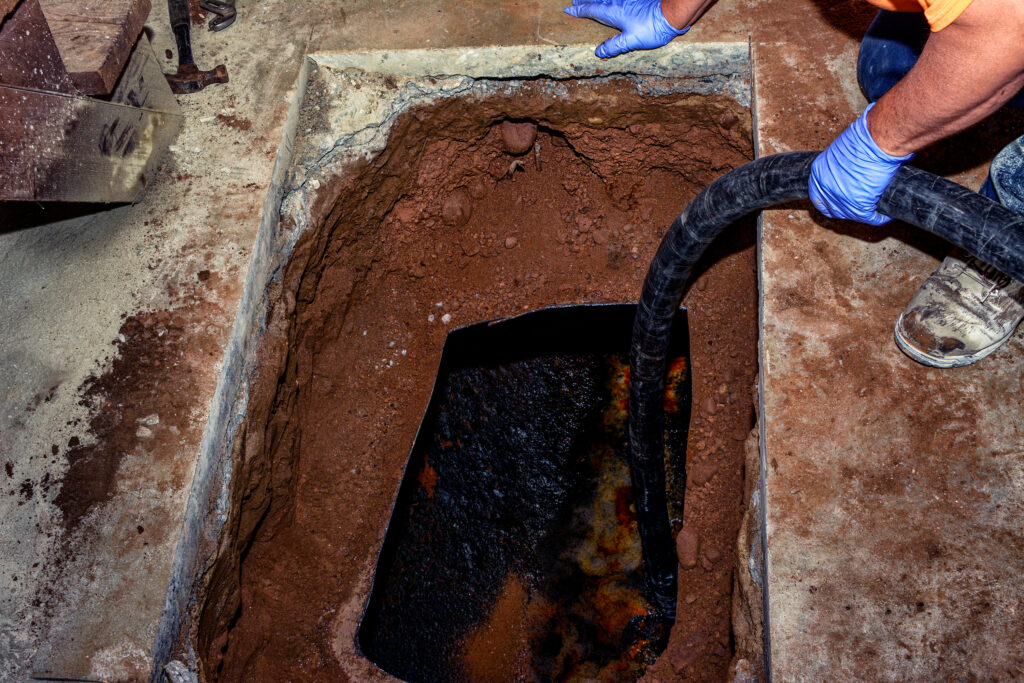
When the owners of a 1940s Portland-area home bought their property, they knew nothing about an old heating oil tank buried beneath their yard. The tank had been decommissioned and closed in place in the 1980s when the home was converted to electric heat, which was standard practice at the time, and long before they owned it.
Everything changed when their neighboring property was sold and redeveloped. During excavation, contaminated soil and groundwater were discovered. Testing confirmed the source of pollution was the closed in place heating oil tank on our clients property. The contamination extended into the neighbor’s yard, the client’s yard, and the public right-of-way.
The Oregon Department of Environmental Quality (DEQ) notified our client, that despite having no role in installing or operating the tank, as the property owner, they were responsible for the full cleanup.
Solution
Because the client purchased the property recently, their homeowners policies had pollution exclusions and were of no use.
Restorical began by mapping the property’s historical ownership back to the 1980s, which led us to the “prior, prior owner,” now living out of state.
Restorical contacted the former owner, explained the situation, and educated them on why their old policies could still provide enormous value. Once they understood that these policies were the key to resolving an unforeseen burden on the current homeowner, they were eager to help.
Working collaboratively, Restorical was able to piece together secondary and tertiary evidence to identify policies that insured the property in the 1980s.
Because the prior owner was the policyholder, we coordinated an assignment of claims allowing our client, the current homeowner, tender the environmental liability claim.
Restorical developed a trigger analysis showing when the releases (of contamination) likely occurred, how those dates aligned with available policies, and why those years should yield coverage. We then packaged the assignment, policies, environmental documentation, and trigger analysis for tender.
Through consistent follow-up and evidence driven discussions, we established the insurers’ obligation to fund the cleanup.
Impact
Once confronted with the historical facts and a well-supported tender, the carriers ultimately agreed to fund the cleanup across all the impacted properties.
What began as a terrifying financial crisis, with our client facing a six-figure expense, ended as a coordinated environmental remediation paid for by the historical homeowners’ policies that insured the property.
Restorical’s approach was educational, transparent, and non adversarial. The prior owner felt respected. Instead of taking a defensive posture, the policyholder came to understand the situation, and was comfortable working with Restorical to locate these policies and assigning these claims to our client. That collaboration unlocked the funding that ultimately protected everyone involved.
Find Your PolicyHidden tanks, forgotten policies, and decades-old contamination can create sudden, expensive liabilities for homeowners and small property buyers. But with the right historical research, many of these costs can be shifted off your shoulders and onto insurance coverage from policies that already exist.
If you’re facing environmental liability or want to know if old policies can protect you Restorical can start your policy search and coverage strategy today. Let’s uncover the insurance that should be paying for your cleanup, not you.