

Perchloroethylene (PCE) replaced petroleum distillates as the solvent of choice for U.S. dry cleaners in 1962. According to Chemical Engineering News, the dry cleaning industry accounted for approximately 90% of the PCE sold in the U.S. in that year.
Perchloroethylene is denser than water and so will descend through the soil to puddle in aquifers in what is known as a “plume.” This plume can move within the groundwater flow to impact the drinking water supply of a community.
Today, PCE releases from decades past continue to migrate through soils near former drycleaning sites across the nation. Inevitably, previously undetected plumes of PCE are discovered within groundwater downgradient of former dry cleaning plants somewhere in the U.S.
A History of Dry Cleaning Machines
Though PCE is the main source of dry cleaning pollution, dry cleaning machines have also played a role. Even though the machines have evolved to decrease the impact of PCE on the environment, how PCE-waste products were disposed of has contributed to dry cleaner pollution.
First Generation Dry Cleaning Machines
“First generation” or “wet to dry” machines used PCE and required the transfer of solvent-wet clothes between washers and dryers. In this process, costly solvent was lost when clothes dripped PCE onto concrete floors. PCE is denser than water and can saturate and penetrate concrete to puddle over time beneath shop floors. Its vapors can not only contaminate the air within the shop but also migrate to ambient air and contaminate neighboring structures.
Second Generation Dry Cleaning Machines
Making their appearance in the 1970s were second-generation dry cleaning machines. These were “dry to dry” machines, which eliminated the need to transfer clothes by hand. Most came complete with distilling components that reclaimed used perc so that it might be conserved and reused.
While this process was efficient in one respect, it left the dry cleaner with the problem of how to dispense with the “separator water” generated by distillation. This effluent was contaminated with residual PCE and could either be flushed through hoses into floor drains (and then into sewers) or into pails where it could be left to evaporate. Pails left inside or outside contaminated the air. Separator water discharged into floor drains sometimes contaminated nearby soil and groundwater because pipes connecting to sewers disintegrated.
Third Generation Dry Cleaning Machines
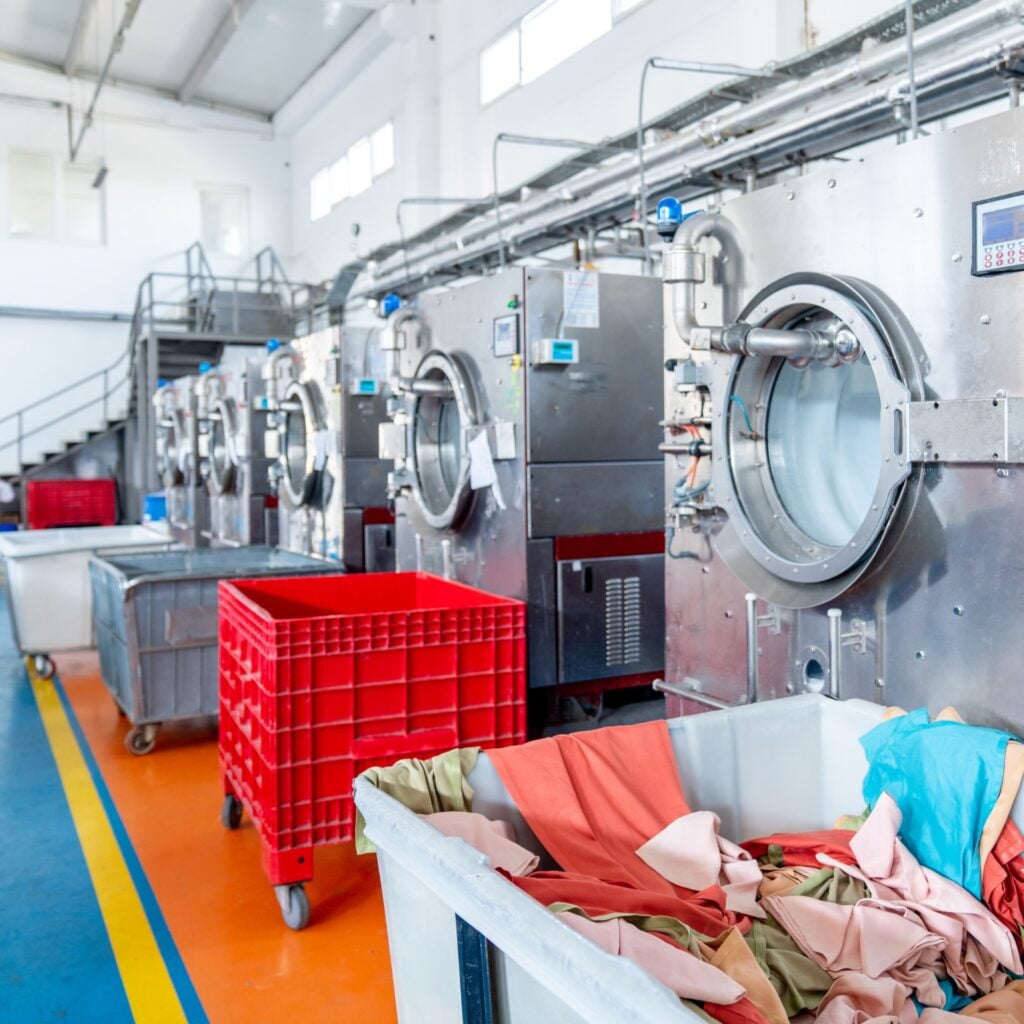
The third generation of dry cleaning machines made their appearance in the mid to late 1970s. These were “closed loop” machines that channeled perc vapors to a refrigerated condenser from which PCE was recovered. Cartridge filters from machines in use in this era were often disposed of in dumpsters, where, undetected, they leaked residual PCE when it rained, contaminating nearby soil and surface waters or groundwater below.
Fourth and Fifth Generation Dry Cleaning Machines
Fourth- and fifth-generation machines were introduced in the American market in the early 1980s. These, too, are “closed loop” machines designed to further control PCE vapors from escaping from the unit. As amendments were made to the Clean Water Act (1989) and Clean Air Act (1990), national emission standards were introduced to limit PCE emissions from dry cleaning plants.
In 1993, the U.S. EPA promulgated regulations that forbid the installation of transfer machines anywhere in the United States. The deadline for the phase-out of PCE transfer machines was July 27, 2008. Since that date, American dry cleaners have gravitated to the use of “greener” dry cleaning solvents, such as pressurized liquid carbon dioxide or silicone-based cleaning solutions, which are considered nontoxic.
The Impact of Dry Cleaning Pollution on Businesses
Once detected in water samples taken down-gradient from the dry cleaning plant, state environmental authorities commonly direct that owners of dry cleaning businesses, as well as owners of the premises, hire consultants to assess the extent of the contamination and put plans in place to remediate the site. It is not atypical for the cost of removing PCE-contaminated soil and treating polluted groundwater to exceed $500,000. In cases where the PCE has penetrated fractured bedrock, the cost can approach $1,000,000. Because dry cleaners are often small business owners, this kind of expense can and often does put them out of business.

When the EPA and state agencies started regulating how PCE was disposed of, insurance policies changed what they would and wouldn’t cover. However, insurance policies that were in effect for a dry cleaning business in the 1960s and 1970s may cover dry cleaning pollution because the way PCE was disposed of was part of the normal course of business and didn’t have the exclusions they often do today.
As vapor intrusion continues to be discovered in shopping centers, neighboring schools, and apartment buildings near former dry cleaning shops, property owners and their tenants hire attorneys who locate and reach out to past owners for contributions to the cost of characterizing the site and remediating the damage.
In turn, these attorneys seek out the expertise of investigators who search for and retrieve insurance policies issued to dry cleaners and commercial landowners during the time that the pollution was occurring. It is those early policies, with their broader insuring agreements and less stringent exclusions, that have the potential to provide the money it takes to pay the environmental engineering and attorney fees.
Restorical Research Can Help
The sleuths who find these lost or mislaid insurance policies are called insurance archaeologists, and Restorical Research’s experts have decades of experience tracking down these policies and helping people recover funds to defray the cost of remediating dry cleaning pollution. Contact us today to learn how we can help.